Alan Watson Featherstone, Executive Director of Trees for Life, writes about his experiences out in the Caledonian Forest, and about his work for the charity.


Two days on West Affric, Part 1

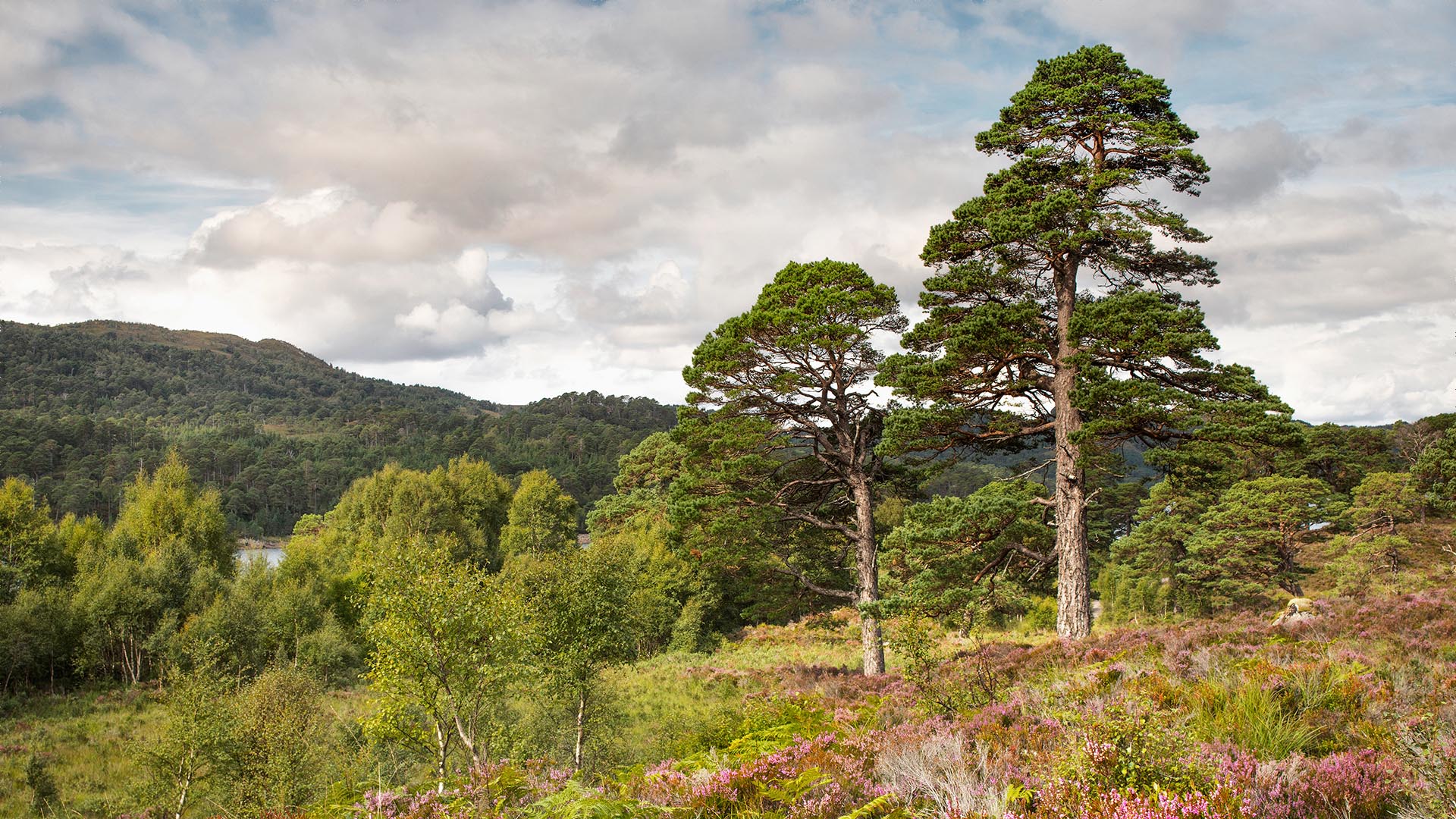
In amongst some of the Scots pines planted by our volunteers in the Carnach Mor exclosure on West Affric.

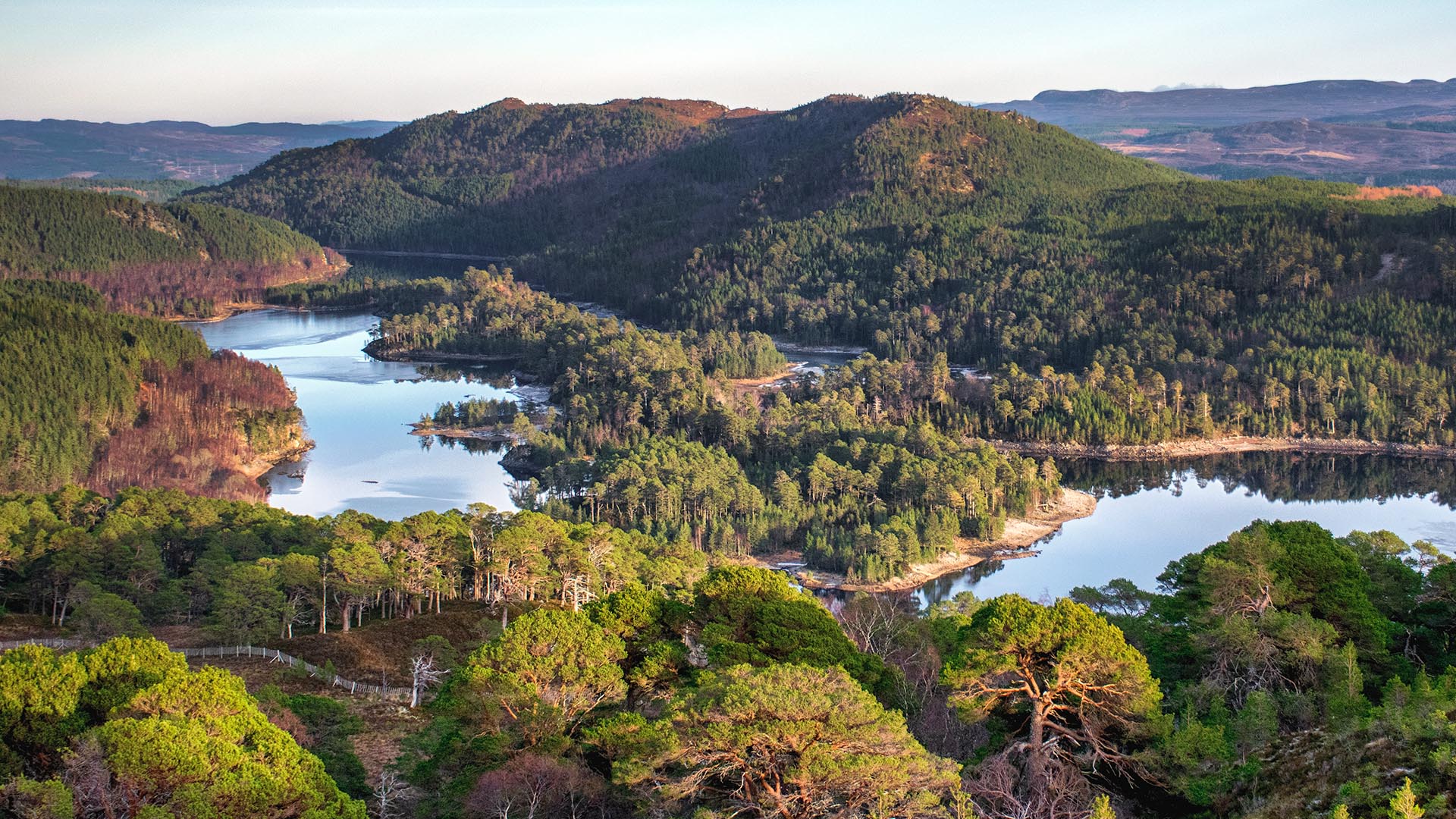
West Affric is a 10,000 acre estate owned by the National Trust for Scotland (NTS) that encompasses the headwaters of the Affric river watershed. Trees for Life has been involved as a partner in forest restoration on the estate since it was purchased by the Trust in 1992, and we planned and implemented a series of 10 exclosures there, for both natural regeneration and tree planting, in the period from 1993 to 2000.

View south from the path from Athnamulloch to West Affric, looking across the the Athnamulloch exclosure and some of the first trees we planted, in 1991.

West Affric is probably the most remote site where we’ve worked, and although I aim to get out there regularly to check on how the trees are growing, it works out usually that it’s about once every 4 years when I make it. As my last visit had been in July 2008, I’d been planning a trip out there this year for some months, so in early June my colleague Mick Drury and I went to spend 2 days on West Affric, to look at how the trees were doing in the various exclosures.

Rowan tree (Sorbus aucuparia) in flower, overhanging the Allt Coire Ghaidheil burn, at the eastern boundary of West Affric.

Access to West Affric from the east entails driving to Athnamulloch on Forestry Commission Scotland land in Glen Affric, and then walking west for about 3 miles to reach the boundary of West Affric. On the way, we could see the trees we planted in the early 1990s in the Athnamulloch exclosure, which is situated just to the west of the bothy that gives the area its name. West Affric itself begins at the Allt Coire Ghaidheil burn, which has a nice footbridge across it surrounded by mature rowan trees – they were in full flower when we visited.

Mick beside the Coire Ghaidheil fence, showing the natural regeneration that has occurred inside the exclosure since the fence was put up in 1994.

The burn flows down from the hills through a section of gorge, and that contains the greatest numbers of trees on West Affric, which is otherwise almost completely deforested in its 10,000 acres. The first project we did with NTS therefore was to put up a fence for natural regeneration there, encompassing 9.5 hectares, and this area is probably the most dramatic in terms of the return of the forest, as a result of that.

The same view in July 2008, during my last visit to the Coire Ghaidheil exclosure.

Because it’s also the first exclosure reached on West Affric, it tends to be the one I visit and photograph the most, and I’ve built up a series of images of the same scenes, photographed over the years, to show the results of our work. One of the purposes of this trip therefore was to take new versions of those same photographs, to provide a visual comparison of the growth of the trees and other vegetation that is taking place there.

This rowan, near the upper end of the exclosure, is one of the largest that has grown there since the fence went up. Note also the lush growth of blaeberry plants.

The same scene in July 2008. The rowan was more fully in leaf then, than in the photo on the left - spring was very late this year, so the tree's leaves weren't fully open during this year's visit in early June.


Blaeberry (Vaccinium myrtillus) in flower near the top end of the Allt Coire Ghaidheil exclosure.

It was particularly impressive to see the large blaeberry plants (Vaccinium myrtillus) flourishing there, as they are a characteristic woodland species, and illustrate the fact that it is not just the trees that are regenerating there, but the whole forest ecosystem. The gorge provides a sheltered location from the prevailing westerly weather, and it is this I believe that enabled the trees to survive there, and is now speeding the recovery of the forest.

Tea-leaved willow (Salix phylicifolia) in flower near the top of the exclosure.

Tea-leaved willow in the foreground, with rowans behind, beside the Allt Coire Ghaidheil burn.


More flowers on one of the tea-leaved willows.


Near the top end of the exclosure there are also some tea-leaved willows (Salix phylicifolia) – a scarce species in the glens where we work – and they were in flower when we visited. During previous visits I had seen perhaps four or five different bushes, but this time Mick and I spotted at least ten separate plants, so the species seems to be spreading there.

View over the central part of the exclosure. Note the growth inside the fence not only of the trees, but also the heather (which still looks brown at this time of the year).

Heading downstream on the west side of the burn, I came to a point where there was a good view over much of the exclosure. This showed not only the young birches, rowans and willows that are growing successfully, but also how heather (Calluna vulgaris) is taking over, replacing the grass that predominates outside the fence. This is the natural process of ecological succession occurring once again – in the absence of overgrazing by deer, grassland is being superceded by dry heath, in which pioneer trees like birch and rowan become established. This is prevented in most of the Highlands today, and on almost all of West Affric the land is kept in a grassland state by the pressure from the deer population.

Adam Powell beside an eared willow bush in the Coire Ghaidheil exclosure in May 1996.

Near the southwest corner of the exclosure there’s a particular eared willow (Salix aurita) that I’ve been photographing since 1996, about two years after the fence was put up.

The series of images I’ve taken since then provide a simple visual record of the growth of this bush, illustrating the effectiveness of excluding red deer (Cervus elaphus) from the area and how the woodland ecosystem is recovering as a result.

The same bush in July 2008...

Eared willow supports a large number of invertebrate species, and also grows in wetter soils than birches. Its presence at Coire Ghaidheil means that it is providing a habitat for a range of insects that would not otherwise be able to live in the mostly tree-less landscape in this upper part of the Affric River watershed.

... and in June 2012

Unlike some of the other willows, eared willow does not grow into a tall tree. In situations like this it will reach a height of 3 metres or so, so this individual may not grow much taller than it is now. However, it should continue to thicken and spread as a large bush, providing a three dimensional habitat of shade and protection for lichens that grow on its stems, plants that thrive underneath it, and insects that feed on it.

Here at the southeast corner of the exclosure, the change in vegetation from grass outside the fence to heather inside it is particularly dramatic. Note also the young rowans getting established amongst the heather.

At the bottom end of the exclosure is the location of another series of photos I’ve been taking during my recent visits to Coire Ghaidheil, showing the change in vegetation inside and outside the fence. The contrast of mainly grass outside with the heather that is predominating inside provides a strong visual indication of the ecological succession that is taking place there again, for the first time in centuries, if not longer.

In the absence of riparian trees to hold the soil in place, the river is eroding its banks here, and large blocks of peat, stranded on the sandbank, have been carried down from further upstream.

Leaving Coire Ghaidheil, we headed further west on the main track that parallels the Affric River. Looking down at one area in particular, where there are a couple of bends in the river, we could see one of the consequences of the loss of the riparian trees that would formerly have lined the river banks here. The upstream-facing bank was being eroded by the flowing water, and large blocks of peat, stranded on a sandbank on the other side, had been carried down from further upstream, where they would have been eroded in a similar fashion.

Scots pines and birches that our volunteers planted at Carnach Mor in the 1990s.

Continuing westwards, we came to the Carnach Mor exclosure, the most easterly of the areas on West Affric where we planted trees in the 1990s. The exclosure is situated on a south-facing slope, below a boulder-covered part of the hill that gives the area its name – Carnach Mor means ‘great stony place’ in Gaelic. Because of the exposure there, in this otherwise tree-less part of West Affric, the trees struggled to grow initially, and we did some additional planting about 3 years ago, to increase the number that are getting established successfully.

This fly was resting momentarily on the opening buds of one of the pines.

The majority of the trees planted there were broadleaves, but we also put in some Scots pines (Pinus syvlestris). I was pleased to see that most of those were looking healthy, with good growth and new buds just opening out. Some of them were also flowering, with the young female cones visible on the tips of this year’s new growth.

Female cone on the tip of the new growth of one of the pines. When pollen is blown there on the wind from male cones, this will develop over 2 years into a fully grown cone with seeds protected by the tough woody scales of the cone.


Another view of the female cone on one of the Scots pines.


Looking west from amongst the planted pines at Carnach Mor. The Alltbeithe Youth Hostel is just out of sight, over the first ridge in the middle distance in the centre of the image.


The young trees at Carnach Mor form a green ‘island’ of new forest in the surrounding tree-less landscape and are a good balance to the trees we’ve planted on Forestry Commission Scotland land, on the south side of the river there. Together, they make up some of the ‘building blocks’ of new woodland that in future will hopefully spread out from there, to provide a forest habitat network, stretching from Glen Affric through to the west coast.

As it was getting late in the day, Mick and I headed west again, towards the Alltbeithe Youth Hostel, the most remote hostel in the UK, where we would be staying for the night. The next day, we would be continuing our exploration and surveying of some of the other exclosures we’ve been involved with on West Affric …

4 comments on “Two days on West Affric, Part 1

  1. Adam Griffin on said:

    Great to see pictures of Carnach Mor where I led a group planting in the 90s.
    I remember it was a particularly interesting and challenging week to lead. Every day out from the Youth Hostel was surreal and wondrous not least because it was a week that we saw snow in June!

  2. alan on said:

    Hi Adam, thanks for your comment – you must have read this blog entry as soon as I posted it, because your reply was so fast! Anyway, it’s great to get your reminiscence of the planting there, and I hope you’ll get up to see the results yourself in the near future!

  3. Ian Armstrong on said:

    Fantastic article! I was part of a work week in May 1995 and back then had aspirations of a career in conservation. 17 years, degrees, diplomas etc I have gradually worked my way up through the ranks of conservation and am now a Lead Adviser at NaturalEngland! The work week with Trees for life was so inspirational for me and helped give me the drive and ambition to go on to great things. Thanks and keep up the fantastic work. You are all still a great inspiration!

    • Hi Ian, thanks for such wonderful feedback, both on my blog, and on the benefits you got from your work week back in 1995. It’s very heartwarming to hear how you’ve benefitted from that experience. We certainly aim to keep going with the work, and have just recently set a target of another million trees in the next 5 years.

Leave a Reply

Your email address will not be published. Required fields are marked *

*

8,278 Spam Comments Blocked so far by Spam Free Wordpress

HTML tags are not allowed.